
Reviving a Dried & Live Sourdough Starter

Scroll down page to view “Reviving a Live Sourdough Starter” video

6 min. 38 sec. long

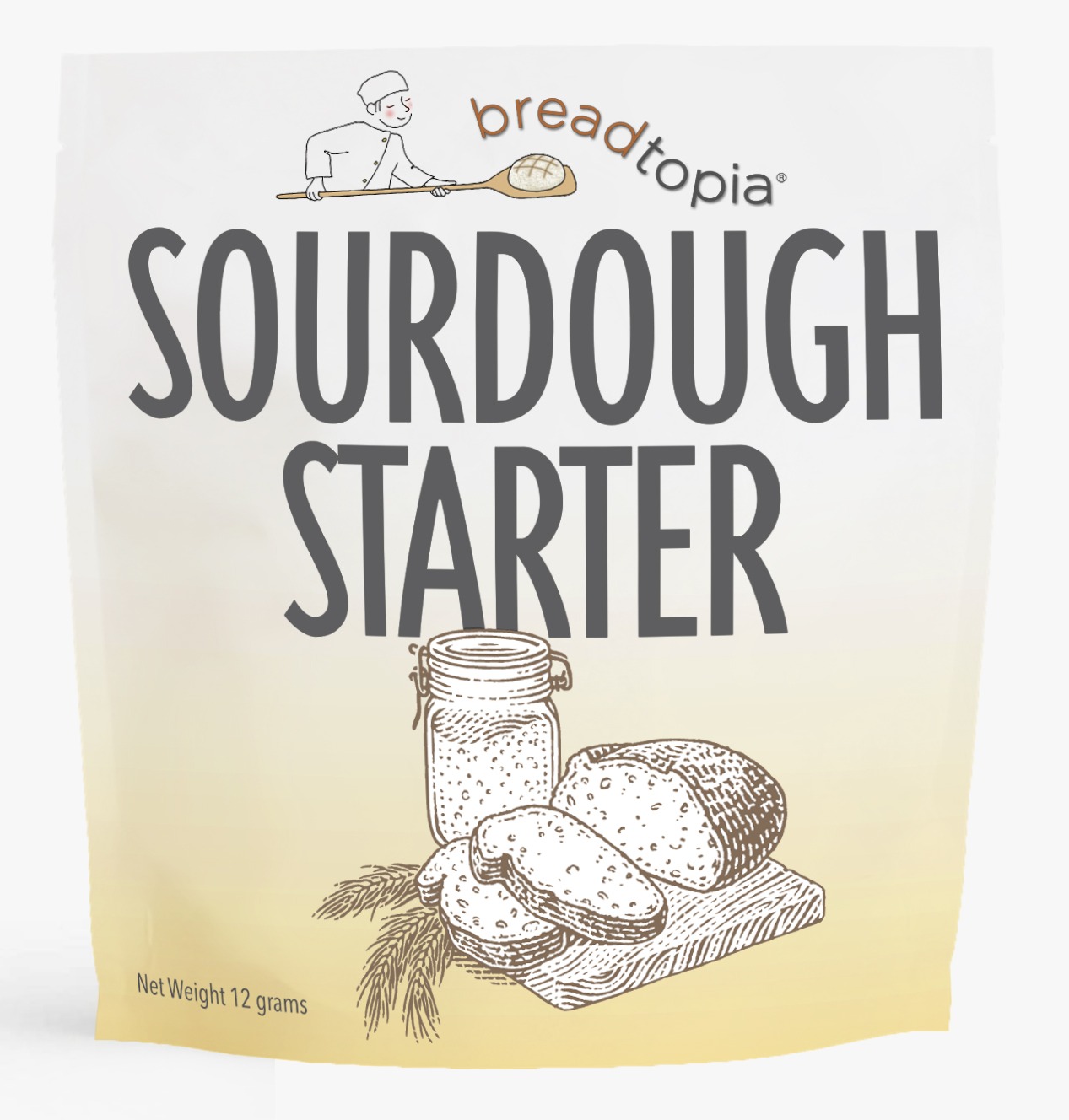
Reviving a dried sourdough starter is a fairly simple matter that should meet with success most of the time. This video covers the details but I’ll jot down a few steps here so you don’t necessarily have to.

  • Soak ½ tsp. dried starter in 1 tbs. lukewarm purified or spring water for a few minutes to soften.
  • Stir in 1 tbs. all-purpose flour, cover and let sit at room temperature for 24 hours. While not necessary, stirring again once or twice during this 24 hours will expedite the fermentation process.
  • Stir in another tablespoon of flour with an additional tablespoon of purified water. If the dried starter is at all viable, as it should be, you will most likely see the bubbling action of fermentation begin somewhere between about 24 and 48 hours. If not, something is most likely wrong.
  • Continue with twice daily feedings as instructed in the video. After a few days you will have a vital sourdough starter that can be used for baking and be put on a maintenance schedule which requires minimal attention and effort.

Post your questions/comments below.

3 min. 56 sec. long

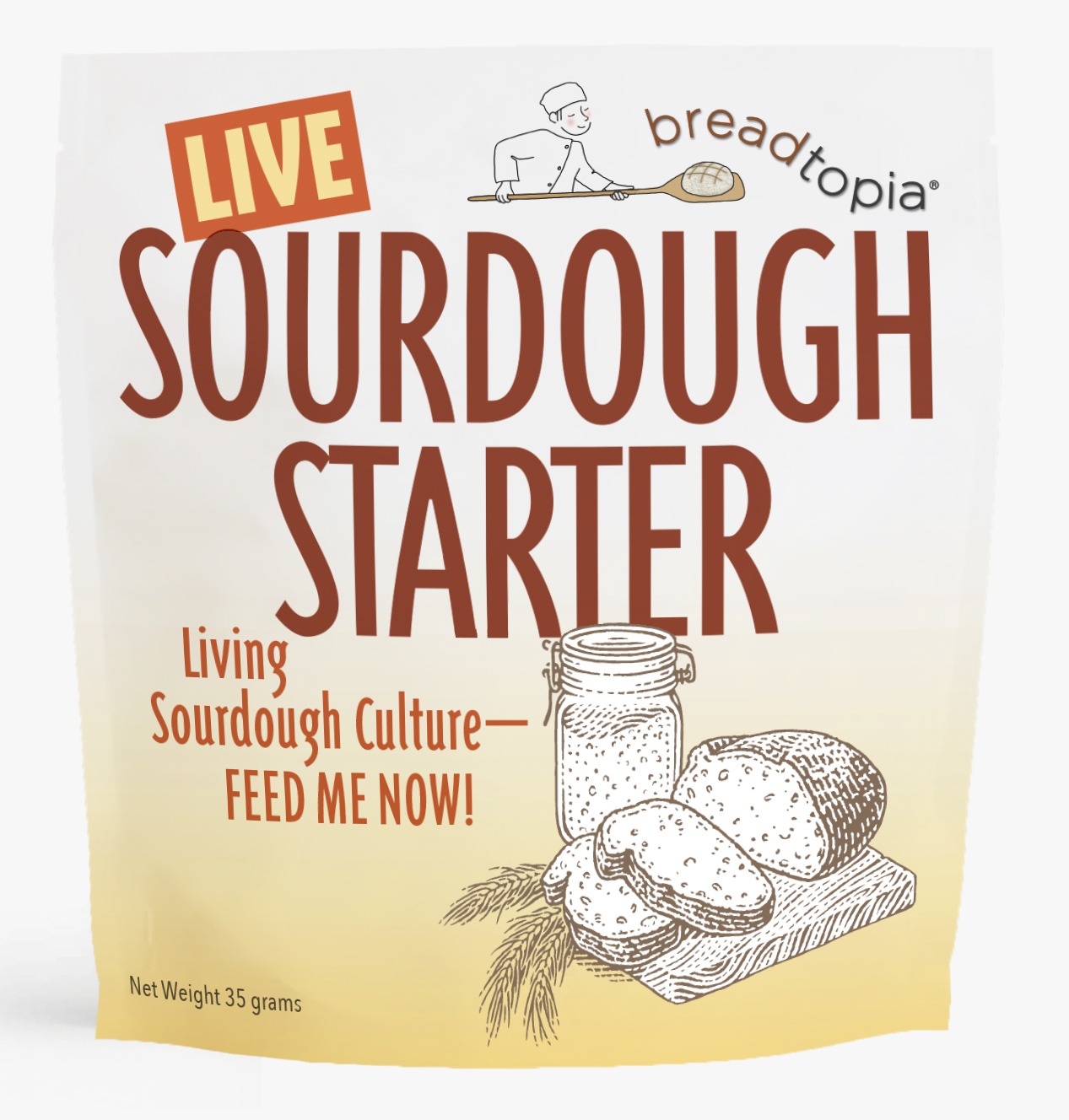
Reviving a live sourdough starter is even simpler and faster than reviving a dried one. Just view the video and/or follow these steps.

  • Spoon out the contents of the zip lock bag into a small bowl or container.
  • Add 2 tablespoons of flour and 2 tablespoons of room temperature purified or spring water. Mix just until the flour and water are incorporated and you have a smooth consistency. (Don’t use tap water as most tap water contains chlorine which is not good for the yeast).
  • Cover loosely with plastic wrap and let sit at room temperature for about 18 – 24 hours. At this point you should see signs of life in the form of some bubbling.
  • Feed the starter again by mixing in about 1/3 cup of flour and 1/4 cup water. Cover and let sit as before for 6-12 hours.
  • You should now have a pretty lively and hearty sourdough starter.  All that is left to do is build it up to the quantity you desire with once or twice daily feedings. See the video entitled “Managing Your Sourdough Starter“.

Post your questions/comments below.

{ 85 comments… read them below or add one }

sierra July 28, 2010 at 11:00 pm

hi, I just realized that I had left my started out, bout a week and a half. During this time it was not fed at all. the consistency is still dough like. What concerns me is that there is little “worm” like things in it. Have I killed the starter? and what the heck are the ” worm” things? Should I even try to revive it? Thank you Sierra

Sandy May 26, 2010 at 8:34 pm

HELP! I’ve been trying to revive an old starter using spelt flour but my starter has turned so glutinous that it cannot be stirred/dissolved in water at all. I’m not sure if this is good or not or how I should proceed. Any help would be greatly appreciated.

Thanks!
Sandy

Breadtopia May 21, 2010 at 7:07 pm

I don’t know but I’m hoping you’ll try it and let us know how it works out.

Sylvia May 21, 2010 at 5:23 pm

A friend came across a packet of 40-year-old dried sourdough starter that had been stored in a bookshelf in a home. Any chance it could be revived? Anyone know how long a dry starter can live?

Janet May 16, 2010 at 12:19 am

Well, I’m happy to report that the starter revived. It just took a few days. But is now going strong. Thanks for the instructions.

Janet May 2, 2010 at 11:48 am

Thanks so much for these instructions. I made a wonderful starter and baked several loaves with it. But now, for whatever reason, it will not activate/revive from the fridge. It’s only been in the fridge for a week.

The starter won’t bubble up like it did before and it smells very sour, not at all like the sweet healthy starter it was before. It does get frothy on the top, but after 24 hours of feeding it is still doing nothing on the rising front.

This is dissapointing. Before hand, after 7 days of fermenting it was a wonderful high-rising starter.

I have tried everything I can think of (no metal utensils, chlorine-free water, etc.). Any idea what could be wrong with it?

Aaron Gross April 7, 2010 at 8:46 am

Just revived my starter that was in the frig for 7 months.Talk about alot of hootch. I can’t believe how strong this stuff really is.

Bart April 6, 2010 at 1:58 pm

Hi,

Is there a destinct difference in flavor if you live somewhere else than in San Fransisco?

Thanks for your advice

Bart

Breadtopia March 18, 2010 at 5:01 am

Hi Carrie,

All good questions. I think most people will tell you that your variety of starter will eventually morph into another variety if you move to another area. Sourdough starter is comprised of the yeast and also beneficial bacteria. It’s the many strains of bacteria that impart the varying tastes. In San Francisco, the strain is actually called Lactobacillus Sanfrancisco. When you move, another dominant strain of bacteria, indigenous to New York, may infiltrate and take over your culture.

You never know what strain of starter you have unless you have it lab tested. Even if you do determine you have the “real thing” in authentic SF starter, being able to bake a loaf of bread that mimics your favorite bread back home is a completely different thing. My take on this topic is any sourdough leavened bread, provided the starter is simply healthy, is better than bread that’s not sourdough leavened. Maybe you’ll end up making something even better than you’ve ever had before.

Mixing cultures is totally fine. There won’t be any unhealthy consequences, but you might want to hold back some of the original in case the resulting hybrid is not to your liking.

Carrie March 17, 2010 at 10:54 pm

I’m very new to making a starter dough and your site, so apologize in advance if this question has already been asked.

I hail from San Francisco, where the sourdough is like no other. I moved to upstate NY to attend a PhD program and was homesick for my special bread. A friend has a starter out there and offered to dry it and send it out. I anxiously await its arrival! Thanks to you, I know I’ll be able to revive it with no problems.

It is my understanding that the distinct sourdough taste from SF is due to the active yeasts in that area. My concern is that even if I use this SF starter, it will eventually lose its specific flavor because it is now out here in NY and using the yeasts here. Am I right, or will my starter retain its SF “feel” for the most part?

Also, I am making my own starter here and will dry and send a sample to my friend to see if he can taste the difference. I was thinking of mixing the two starters (one from SF and one from NY) to see what results. Will that work, or will it cause a strange and “unhealthy” reaction?

Many Thanks!
Carrie

Jeannette March 13, 2010 at 10:52 am

Thanks to your written instructions and videos, your dry starter is now bubbly and doubly in my kitchen after only two days. I will admit to reading and viewing all of your online instructions as well as practicing with a yeast-water-flour starter first, so I am looking forward to a long-living, healthy sourdough starter. Including enough dry starter in your package for more than one try quieted any reservations I had about ruining my attempt to revive the starter, i.e., I did not freak out. I will be feeding it awhile before using it, but I know it will produce some delicious bread. Thank you.

Breadtopia March 1, 2010 at 7:24 pm

Hi Anders. Gosh, I don’t know. Are you thinking of adding the dried out starter in lieu of yeast or live sourdough starter in order to stretch out the rising time?

Anders March 1, 2010 at 7:20 pm

Hi Eric,
I saw your videos and recently got a pack of sourdough additive from Europe to add to bread recipes. Im curious if you could add dried out starter to a no-knead recipe that sat in a warm spot (like oven with light bulb on) for 20+ hours? Thought I would ask before I experiment. Thanks. Anders

Breadtopia February 27, 2010 at 6:35 am

Hi Linda,

That liquid at the top is hootch (alcohol) and you can just pour it off. Mixing it in is ok too. It won’t hurt anything necessarily, but it also won’t form on really healthy starter. Sometimes sourdough starter just requires more frequent feeding to keep it healthy enough to not form hootch.

Linda Kidwell February 6, 2010 at 4:34 pm

Hi! I have been using a starter from a company in california. They specialize in sour dough bread. It’s great, but I’ve noticed a couple of times now that a liquid almost chlorine-like has formed over the top of the starter and when I mix it in the nice elastic texture is now thinner. Has the starter gone bad and if so,can I revive it? Also,is it safe to use. I have used it and the bread was fine,but I don’t want to use it if it’s rancid. I also make large amounts of starter at a time,could this be causing a problem? Thanks so very much for all your help.
Linda

Breadtopia January 14, 2010 at 12:39 pm

You might be able to revive it. Take a couple tablespoons from the middle and mix it with 1/2 cup of flour and 1/3 cup water (non chlorinated) and let it sit at room temp for a day or so. If it starts showing signs of life, feed it a few more times until it’s going strong.

Jennifer January 14, 2010 at 12:31 pm

Is there any way to use a starter that has been in the fridge for around 6 months? Not being fed?
Thanks-
Jen

DGAllen November 20, 2009 at 10:39 am

Hi. I received my live starter UPS 3 day select yesterday. I revived it last night and by this morning it had already gotten very bubbly and doubled in size! I fed it again this morning based on Breadtopia’s reccomendation since it was already active. I can’t wait to make my first loaf.

tammy November 16, 2009 at 4:59 pm

Well, I tried the sugar and it did accelerate the rise. It also added alittle sweetness to the bread. I got rave reviews from friends . I think that it just made a better bread. Thanks for all the help.

Breadtopia November 12, 2009 at 3:00 pm

If anything, a little sugar aught to help the rise as it’s food for the starter. It may actually accelerate the rise so be a little more alert to possibly popping it in the oven sooner than otherwise.

tammy November 10, 2009 at 5:07 pm

Yes, using sourdough starter to make a loaf of bread ideal for sandwiches. I was also wondering if I used alittle sugar in the dough to sweeten it would cause the bread to not rise? Thanks for letting me pick your brain so to speak.

Breadtopia November 6, 2009 at 7:02 am

Hi Tammy,

Sorry for the delay. Missed your post until now.

Either type of flour is fine. In fact just about any type of flour at all is fine.

Using metal utensils will absolutely not cause any problems. I would just avoid long term storage of starter in a metal container as the acid in the starter may eventually react with the metal.

Is a sourdough pan bread just sourdough bread baked in a pan or does it refer to something else in particular?

Breadtopia November 4, 2009 at 9:55 pm

Hi Amy,

Baking will kill anything potentially harmful although I’ve never heard of anyone adversely effected by grungy starter. On the other hand feeding multiple times is usually the formula for freshening up the starter and doubling is a good sign, so I don’t know why the lingering Pine Sol taste. Someone else mentioned soap in reference to their starter a while back. Interesting.

Amy November 2, 2009 at 9:50 am

Hi Eric,

I have been baking with my sourdough starter for almost a year now with generally great results. I’m not the most diligent starter tender but in the past I have been able to bring it back or perk it up without a problem. I recently made a loaf after leaving my starter unattended in the fridge for 3-4 weeks. Although I fed it multiple times before baking, the bread tasted a bit like soap. I’ve tried again to resuscitate my starter by tossing most of it and using a small amount to grown a new one. This newer starter still smells a bit like alcohol but is bubbling and doubling in size. Is it safe to bake with? Could tap water be causing the funky smell and taste? I don’t want to toss my starter if it is healthy but I don’t want to waste good flour and bread baking loaves that taste like Pine Sol.

Thanks for your help,
Amy

tammy October 26, 2009 at 5:17 pm

I am just starting all of this. So everything is very new to me. I am alittle confused. I think. My questions are;
1. I am reviving dried starter with bread flour instead of AP flour and I fed it after 12 hours with bread flour. Is this okay or do I need to start all over with AP flour?
Mind you that I just found this site and all the videos are very helpful. I have the Carl Griffith’s SD starter. The C G’s broshure says not to use metal , but I see you in the video using metal wisk.
2. Will using metal harm the starter?
3. Will you be making a video of how to make a sourdough pan bread?

Scooter September 12, 2009 at 4:20 pm

High Altitude Update for NKSD. I haven’t written for a while and wanted to let you know that the reason my bread was not turning out well was because I had it set at the 100 degree proof setting on my oven for the 18 hour rise. This is too warm. I discovered this when visiting a friend who actually used “room temperature”. I now let it rise for 18 hours inside the oven with just the light on. (My home is very well insulated and doesn’t get over 65 degrees). For the second rise in the proofing basket I use the 100 degree proof setting. Works like a charm! oh, and no need to add any yeast, the starter is all that it takes.

Breadtopia April 16, 2009 at 9:44 pm

Hi Perley. It’s better to use unbleached unbromated wheat flour.

perley rogich April 16, 2009 at 9:40 pm

can i use bleached weate flower to make a starter thanks.

Breadtopia March 19, 2009 at 8:13 am

Hi Loraleigh,

I’m not an expert either but I’d say the same as Dave as far as reviving your starts goes. Once it’s fully resuscitated and healthy, then start feeding it whole wheat flour if you want a whole wheat starter.

What you describe doesn’t sound good. You might want to take a very small amount of what you have and start feeding it with white flour and toss the rest. If your starter is going to work at all, then that little bit will work to get it going again.

Dave Womack March 19, 2009 at 7:50 am

Loraleigh,
I’m not an expert, but I think you’ll have better luck using all purpose or bread flour (white) to revive a starter. WW flour has some extra critters in it that conflicts with the good stuff in sourdough starter. There should be noticeable bubbling going on within a couple of days.
Good luck

Loraleigh March 18, 2009 at 8:16 pm

Hi, I was given some dried starter from a friend, no instructions, and I think it was a store bought starter. I revived the starter using whole wheat flour it has been two days and now there is a blackish/grey liquid on top and maybe some blackish bits inside? I don’t know it’s hard to tell. Is this ok? It doesn’t smell bad just sour/yeasty. I have been feeding 1/2 cup WW flour and water everyday. Can you give me any pointers? Thanks

Bob Packer February 16, 2009 at 10:32 am

Janet,

I agree with you. I use small jars about the size of baby food jars to store my starter.
So I am storing only about a quarter cup.

On Thursday evening, I put the starter in a large bowl, feed it and cover it with plastic. Friday morning, feed again. Friday evening as soon as I get home from work I feed again. About two hours later, I mix up my dough, remembering to put starter back into the jar, feeding it and then refrigerating immediately

Janet Kelly February 16, 2009 at 7:40 am

Jackie,

I’ve found that if the container used to revive a dried starter is too large, it is inclined to dry out if left for a long period. Graduating from small to large as it grows seems to work better and faster.

Breadtopia February 2, 2009 at 10:04 pm

Yes, that would be more efficient.

Jackie February 2, 2009 at 10:27 am

Hi Eric,
I’m curious as to why you start with such a small container to revive the dried starter. Wouldn’t it be more efficient to start it in the jar you intend to keep it in?

jackie

Leave a Comment

{ 1 trackback }